
TruthFinder’s interface makes starting a deep people search effortless.
In an era where digital anonymity is common, the need to verify who you are interacting with has never been higher. Whether you are reconnecting with old friends, checking out a new neighbor, or identifying a mystery caller, having a robust people finder is an essential part of your digital toolkit.
TruthFinder has dominated the market for years, known for its ability to aggregate vast amounts of government data into readable reports. But does it truly deliver on its promises? In this review, we break down its features, accuracy, and where it stands compared to the “free” alternatives.
How TruthFinder Works
TruthFinder is a public records search engine. It scans hundreds of millions of federal, state, and county records to compile a comprehensive dossier on an individual. Unlike a standard search engine, it accesses the “deep web”—databases that are technically public but difficult for the average person to navigate or aggregate manually.
For those tempted to use a people search free of charge, the difference here is depth. Free sites often provide outdated or fragmented data. TruthFinder operates on a subscription model, allowing them to pay for access to premium data sources, ensuring higher accuracy and more current information.
Key Features and Functions
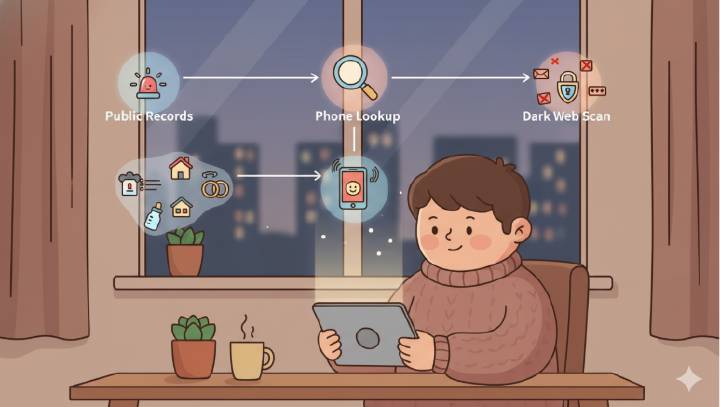
TruthFinder scans millions of public records to uncover hidden details.
- Comprehensive Public Records Search
The platform’s bread and butter is its background check capability. By entering a name and city, the people search algorithm pulls data from:
Criminal & Traffic Records: Detailed histories of arrests, misdemeanors, and felonies.
Location History: A timeline of past and current addresses.
Vital Records: Birth, marriage, and divorce documents.
This feature is invaluable for those looking to verify the history of someone they have just met. For more context on what constitutes a public record, you can visit USA.gov’s guide to family and public records.
- Reverse Phone Lookup
One of the most practical tools in the TruthFinder suite is the Reverse Phone Lookup. If you are receiving harassment calls or texts from unknown numbers, this feature can reveal the owner’s identity, location, and even carrier data. It turns a faceless number into a tangible lead.
- Dark Web Monitoring
A surprising but welcome addition is the Dark Web scan. This feature allows you to input your own email address to see if your credentials have been compromised in a data breach. It adds a layer of personal cybersecurity to the standard people finder utility.
The Pros and Cons

Access detailed people insights instantly through TruthFinder’s comprehensive reports.
While TruthFinder is a powerhouse for official documents, no tool is perfect. Here is a balanced look at where it shines and where it falls short.
The Good (Pros)
Ease of Use: The interface is clean, intuitive, and mobile-friendly.
Transparency: The site clearly warns users about FCRA compliance, ensuring you know the legal limits of how to use the data (e.g., you cannot use it for employment screening). You can read more about these regulations at the Federal Trade Commission (FTC) website.
Deep Data: The criminal and court record search is arguably one of the best in the industry.
The Bad (Cons)
Lack of Social Media Component: While TruthFinder is excellent for government records, it struggles with the modern digital footprint. The reports often lack a robust social media section.
Inconsistent Profile Matching: The tool only finds profiles sometimes. If the target has a common name or a limited paper trail, the engine may struggle to locate their specific online accounts, leaving gaps in the social data.
Final Verdict

TruthFinder helps verify identities quickly with reliable reverse phone lookups.
TruthFinder remains a top-tier choice for those who need to access official records quickly and legally. It takes the hassle out of visiting county clerk offices and provides a centralized dashboard for personal safety checks.
However, users should manage their expectations regarding social media. If your goal is strictly to find someone’s Instagram or TikTok presence, TruthFinder may leave you wanting more. It is a tool designed for official history—arrests, addresses, and court dates—rather than digital social habits.
If you require a deeper dive into an individual’s online presence to complement the official records, you might need to look elsewhere for those specific people insights. For everyone else, TruthFinder offers a professional, reliable, and secure way to uncover the truth.